- info@delta-biomechanics.com
- 5th Floor, Delta Health Care Chattogram Limited, 28, Mirzapul Road, Katalgonj, Panchlaish, Chittagong.


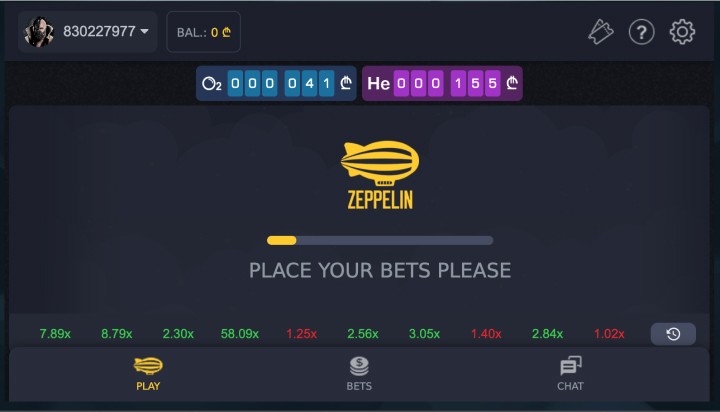
Let’s examine what it really requires to launch a game like Zeppelin Crash for players in the UK https://zeppelincrash.net/. It’s not just a fun idea and some code. You must have a technical foundation that’s rock solid, completely legal, and built to manage the pressure of real-time betting. This foundation has to ensure fairness, safeguard every bit of player data, and keep running no matter how many people connect on a Saturday night. Getting this right is the difference between a fleeting experiment and a thriving, trusted platform. Here, we’ll break down the nine essential components you need to build, emphasizing the specific demands of the UK market and its strict regulatory environment.
Any player demands a protected account. You create a specialized system to handle registration, login with multi-factor authentication methods, and profile management. Built directly into this is a robust Know Your Customer process. This system handles the verification procedures required by UK law. It checks ID documents, validates a player’s age, and verifies their address against reliable databases. The objective is a process that is seamless for genuine users but strict enough to block fraud and underage sign-ups. All the personal data captured here is coded, both when saved and when transmitted over the internet. This system establishes the secure hub for each player’s activity on the platform.
You develop with scalability in mind. The architecture should grow horizontally. This means you can add more additional game servers or database replicas as your player base grows, without a major overhaul. Using container tech with Docker and management with Kubernetes makes this process of adjusting and upgrading services more streamlined and dependable. You also plan with an API-first, modular method. This makes it more straightforward to add new features later—like a live chat room, tournament types, or entirely new games—without disrupting the existing infrastructure. The aim is a system that can deploy smoothly today but also evolve over the next years.
Picture the Zeppelin is ascending and your connection stops. That scenario will lose players instantly. To avoid it, your server configuration needs two things: redundancy and proximity. Using a cloud service like AWS or Google Cloud, you establish a group of servers exclusively for the UK region. You configure load balancers to spread traffic and use Content Delivery Networks to store game art and code proximate to players. The objective is 99.99% uptime. You also plan for auto-scaling. When player numbers spike, the system should autonomously spin up new server instances to share the load. This secures the game feels responsive and smooth, whether there are fifty players or fifty thousand.
Your records, your vigilance, and your safeguards form a critical trio. For data, a single database isn’t enough. You employ a fast, in-memory database like Redis to control the live game state for speed. Then, a primary SQL database like PostgreSQL stores all permanent records—financial transactions, user accounts, game history—with full ACID compliance for accuracy. To watch over everything, a monitoring stack with tools like Prometheus and Grafana gives you a live dashboard of system health, with alerts for any unusual activity. Wrapping it all is a security layer. This features next-generation firewalls, intrusion detection systems, and professional DDoS protection from a service like Cloudflare. Key practices within this setup are non-negotiable:
This game’s core mechanic, the crash point generation, needs to be without question. This requires a certified Random Number Generator. You require an RNG that has successfully completed strict testing by an external testing body for example, eCOGRA or iTech Labs. Their public certification demonstrates the game’s outcomes are random. However, for today’s players, specifically in markets influenced by cryptocurrency, that is often inadequate. This is where a transparently fair system enters the picture. Using this system, every round’s result is generated from a secure seed. Once the round ends, players can check that seed to validate the outcome was predetermined and couldn’t be changed once wagers were made. Such transparency cultivates a stronger sense of trust. It proves to users the game algorithm’s integrity can be examined by them.
Two critical streams of data must flow perfectly: the game action and the money. On the game side, you must have a persistent, instant connection to all player’s browser. WebSocket technology handles this, enabling the server send the rising multiplier to each screen at the precise same moment. Regarding the money, you must have fortress security. You implement payment gateways that are widely used in the UK and compliant with the PCI-DSS Level 1 standard. This covers debit cards, e-wallets like PayPal and Skrill, and bank transfers via Open Banking. All transaction gets protected end-to-end with TLS 1.3. You should also implement tokenisation, which signifies you store a token in place of the actual card number on your servers. This blend offers the instant thrill of the game alongside solid financial security.
Your starting point isn’t programming or visuals. It’s a hardware server in a data centre approved by the UK Gambling Commission. This is a legal requirement, not an option. The UKGC stipulates that all data and financial transactions for UK players take place on servers within a whitelisted jurisdiction, which includes Great Britain. You must collaborate with a data centre provider that specialises in this highly compliant world. They need to provide confirmed geographic placement, physical safeguards, and full audit trails. This licensed server environment is your non-negotiable cornerstone. All other components gets built on top of it. Working with these providers often means your hardware resides in a exclusive, high-compliance zone, managed to the exact requirements your UKGC license stipulates.

Social responsibility features are mandatory in the UK, not optional add-ons; they form part of the core system. You are required to implement tools like deposit limits, session timers, and self-exclusion directly into the account system. The system must also track play patterns for signs of risk, generating automated alerts and messages to the player. To administer the entire platform, you need a secure admin panel. Access should be restricted by VPN and multi-factor authentication. From this administration hub, your team can supervise live games, manage customer support issues, manage withdrawals, and create the reports required by the UKGC. This backend is vital for both daily operations and keeping your license.
UK law mandates it. The Gambling Commission’s rules specify that the infrastructure for UK-facing remote gambling has to be in a whitelisted jurisdiction, which encompasses Great Britain. This sets the operation under UK data protection and fairness laws. A practical benefit involves lower latency, which keeps the game faster and more responsive for players in the UK.
Two mechanisms offer this assurance. First, the Random Number Generator is certified by an independent testing lab like iTech Labs. Second, the provably fair system enables you to verify each round yourself. After a game, you can check the cryptographic seed that determined the crash point, proving it was set before the round began and could not be altered.
The platform will offer the payment methods UK players use most. This features Visa and Mastercard debit cards, e-wallets such as PayPal and Skrill, and direct bank transfers using Open Banking. All payment processing uses gateways that meet the strict PCI-DSS Level 1 security standard.
We utilize encryption standards you’d expect from a bank. Data transferring between your device and our servers is protected by TLS 1.3 encryption. When stored, it’s encrypted with AES-256 encryption. We also use tokenisation for card details, so your actual card numbers are never stored on our systems. Regular security testing and compliance with UK GDPR law offer additional layers of protection.
The high-availability design makes this very improbable. But if a technical issue occurs, the provably fair system ensures a fair resolution. The crash point for that specific round is already produced and locked in. When service is restored, all bets are paid out based on that predetermined outcome, so no player loses money unfairly due to the outage.
The tools required by the UKGC are built directly into your account options. You can set daily, weekly, or monthly deposit caps. You can take a timeout for a set period, or choose self-exclusion. The system may also alert you with reality checks during long sessions and provide easy links to support services like GamCare.
Absolutely. The game is built with flexible web design, so it adapts to fit any screen, from a smartphone to a desktop monitor. You get the full experience right in your mobile browser, with no app download necessary. The real-time gameplay and all features function the same way on a phone as they do on a computer.